Summer Special: $49 AC Boost™ Tune-Up — includes a $50 gift card toward your next service.
Book Yours
Spotty Dishes, Stiff Laundry, Orange Stains? Start With a Free In-Home Water Test
Water Quality Solutions: Softeners, Filtration & Reverse Osmosis in Cincinnati, Dayton & Monroe, OH
Southwest Ohio water is hard on your plumbing, your appliances, and your skin. We test what's actually in your water, then install, service, or repair the softener, filter, or purification system that fixes it — sized to your home, not to a sales sheet.
4.9 · 173 Google reviews
Family-OwnedLicensed & InsuredNATE-Certified24/7 Service
Install & Service
The Water Quality Systems We Install and Service
Hardness, taste, staining, and bacteria are four different problems, and each one takes its own equipment. Here's what we install, service, and repair across Southwest Ohio — on its own, or staged together into a whole-home system.
Most requested
Water Softeners
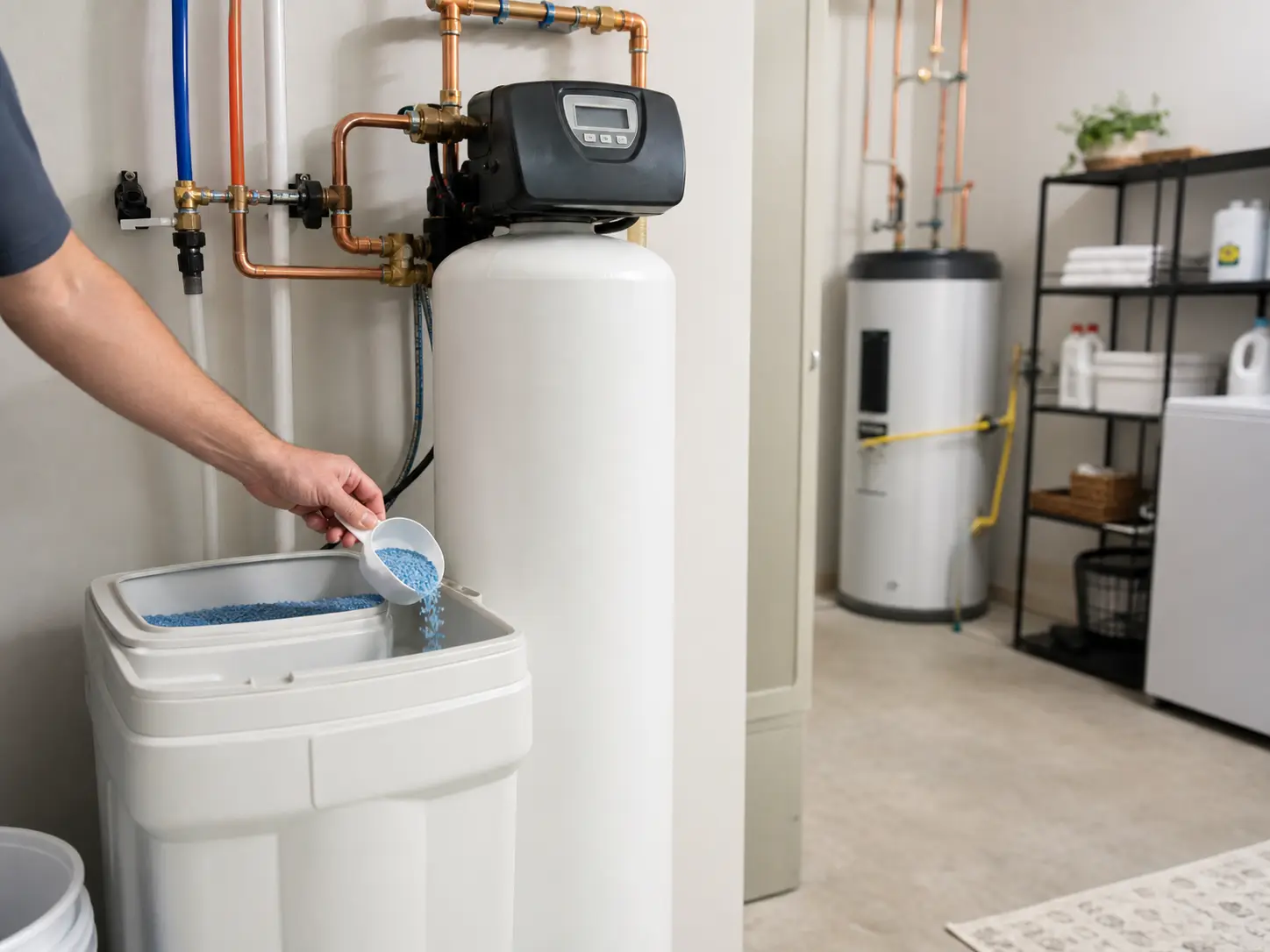
An ion-exchange softener is the only equipment that genuinely removes the calcium and magnesium behind scale, spotting, and soap that refuses to lather. We size yours on measured hardness so it regenerates about once a week rather than burning through salt.
24,000 to 64,000+ grain capacities
Protects the water heater, dishwasher & washing machine
A softener that has stopped working is easy to mistake for a softener that needs replacing. Far more often it is the control valve, a salt bridge, or a fouled resin bed — and far more often it is a same-visit fix. We service every major brand, including units we did not install.
The water went hard again
Spots are back and soap stopped lathering
Usually the system quietly stopped regenerating — a salt bridge has crusted over the brine tank so the unit draws no brine, or the control valve lost its settings after a power blip. Resin fouled by iron looks identical from the tap and needs cleaning or replacement instead.
It regenerates constantly
You hear it cycling at odd hours
A stuck valve, a failed meter, or a unit sized too small for the household will regenerate far more often than the once-a-week target, wasting salt and water on every cycle. We check the meter against your actual usage before changing any settings.
The salt never goes down
The tank has looked full for weeks
That is the classic salt bridge: a hard crust forms above the water line so the tank only appears full, while underneath it the brine well is empty and the softener regenerates with plain water. Breaking the bridge takes minutes — finding why it formed matters more.
The water tastes salty
Most noticeable right after a regeneration
Softened water should never taste of salt. When it does, brine is not rinsing out properly — typically a clogged drain line, a stuck injector, or a valve ending the cycle early. It is a repair, not something you should have to live with.
Repair is usually the cheaper answer, but not always: past roughly twelve years, a failing valve on a corroded tank is money better spent on a new unit. We tell you which one you are looking at before any work starts. Book a softener service call or call (937) 794‑5060.
Deep Dive
Water Quality Systems Compared
Softeners, filters, and purifiers solve different problems, and buying the wrong one is the most common water quality mistake. Here's what each does — and what it doesn't — for Cincinnati, Dayton & Monroe homeowners.
Water Softener (Ion Exchange)
How it works: Water passes through a tank filled with resin beads that hold sodium ions. The dissolved calcium and magnesium that make water hard trade places with that sodium, so what leaves the tank is soft. Once the resin is loaded up, the system rinses itself with brine from the salt tank and starts over — that's the regeneration cycle you occasionally hear at night.
Advantages
The only equipment that actually removes hardness — filters do not
Stops scale from building inside pipes, the water heater, dishwasher, and washing machine
Soap, shampoo, and detergent lather properly, so you use noticeably less
No more chalky spots on glassware or crust on faucets and showerheads
Drawbacks
Needs salt added periodically and a drain line for regeneration
Adds a small amount of sodium — roughly 8 mg per liter per grain of hardness removed
Does nothing for chlorine taste, sediment, iron, or bacteria
Undersized units regenerate constantly and waste salt and water
Lifespan: 10-15 years, with the resin bed often lasting the life of the unit when it is protected from chlorine and iron.
Cincinnati/Dayton consideration: Municipal water here is generally hard, and wells outside the city limits are frequently much harder. Hardness above 7 grains per gallon is classified as hard and above 10.5 is very hard, which is where most homes in our service area land. If anyone in the house is on a strict low-sodium diet, we can run the system on potassium chloride instead of salt, or add reverse osmosis at the kitchen tap.
Whole-House Water Filtration
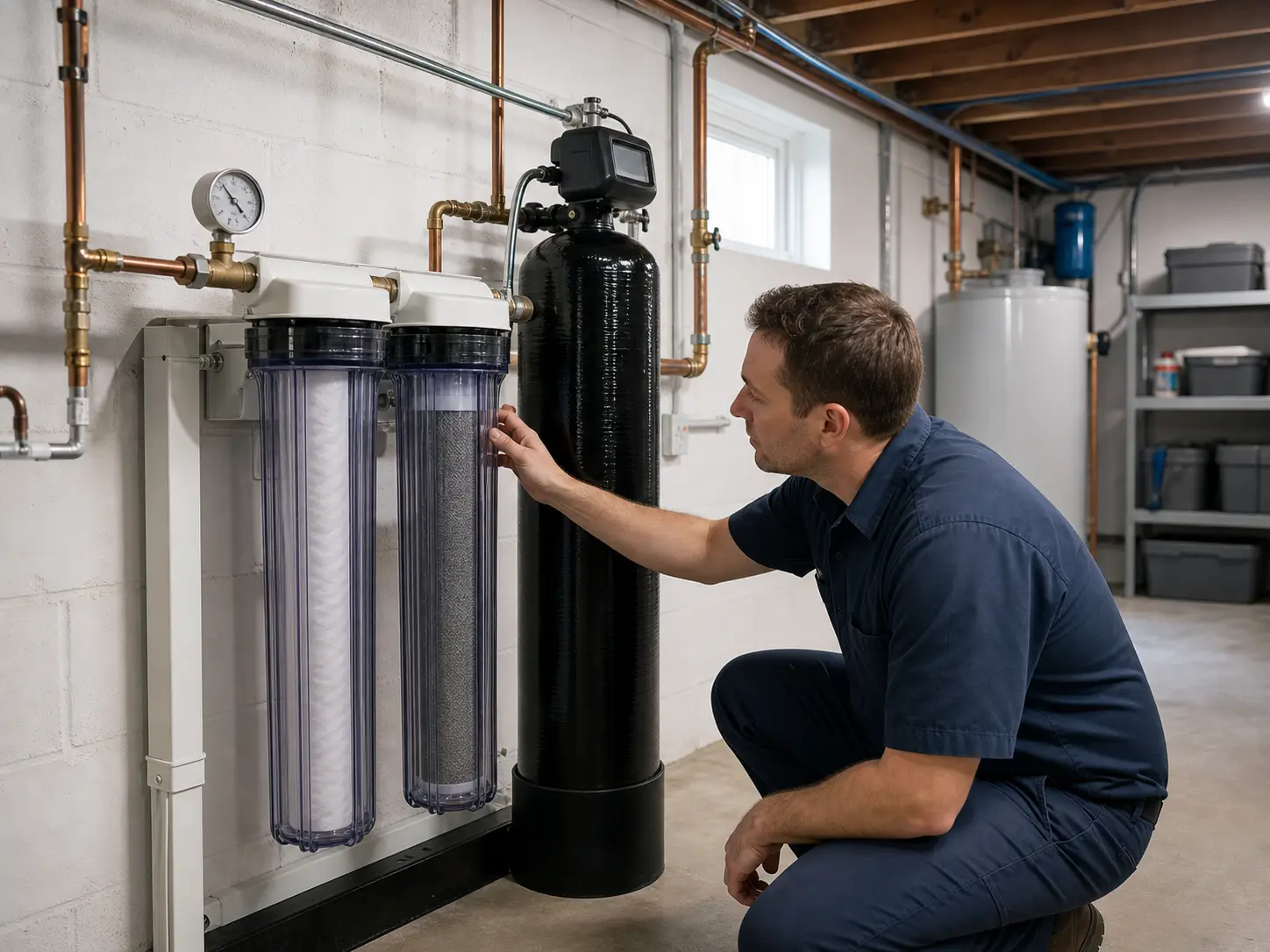
How it works: A filter installs on the main line where water enters the house, so everything downstream is treated. A sediment stage catches grit, rust flakes, and silt; a carbon bed then adsorbs chlorine, chloramine, and the taste and odor compounds that come with municipal disinfection. Backwashing models rinse their own media on a schedule; cartridge models use replaceable elements.
Advantages
Better-tasting, better-smelling water at every tap, not just the kitchen
No chlorine smell in the shower, which is easier on skin and hair
Protects a softener downstream — chlorine gradually degrades softener resin
Sediment stages keep grit out of faucet aerators, valves, and appliances
Drawbacks
Does not soften — hardness passes straight through carbon
Media beds need replacing every five years or so; cartridges more often
Backwashing models need a drain line and can slightly reduce pressure
Not a substitute for reverse osmosis if you want the highest-purity drinking water
Lifespan: The housing and valve typically last 10-15 years; the carbon media is a wear item replaced roughly every five years depending on usage and chlorine levels.
Cincinnati/Dayton consideration: Municipal utilities in our area disinfect the water they deliver, which is exactly what keeps it safe — but the residual is also what people taste and smell at the tap. Look for filters certified to NSF/ANSI 42 for taste and odor, or NSF/ANSI 53 when there is a specific health-related contaminant to address.
Reverse Osmosis Drinking Water System
How it works: Household pressure pushes water against a semipermeable membrane fine enough to hold back dissolved solids, with carbon pre-filters protecting that membrane and a small tank storing what it produces.
Advantages
The most thorough treatment available for drinking and cooking water
Reduces dissolved solids, lead, nitrates, and a wide range of other contaminants
Can feed the refrigerator ice maker and water dispenser, not just the tap
Ends the cost and hassle of bottled water for good
Drawbacks
Treats one tap, not the whole house — it is not a softener replacement
Sends some water to the drain as part of normal operation
Slower fill rate than a standard faucet, and takes up cabinet space
Pre-filters need changing annually and the membrane every two to five years
Lifespan: 10-15 years for the system, with filters and the membrane replaced on schedule.
Cincinnati/Dayton consideration: Reverse osmosis works best on water that has already been softened, because hardness scales the membrane and shortens its life. If you are considering both, the softener goes in first and the RO unit follows. Look for systems certified to NSF/ANSI 58, the standard written specifically for reverse osmosis. See the full stage-by-stage breakdown below.
Well Water Treatment & UV Purification
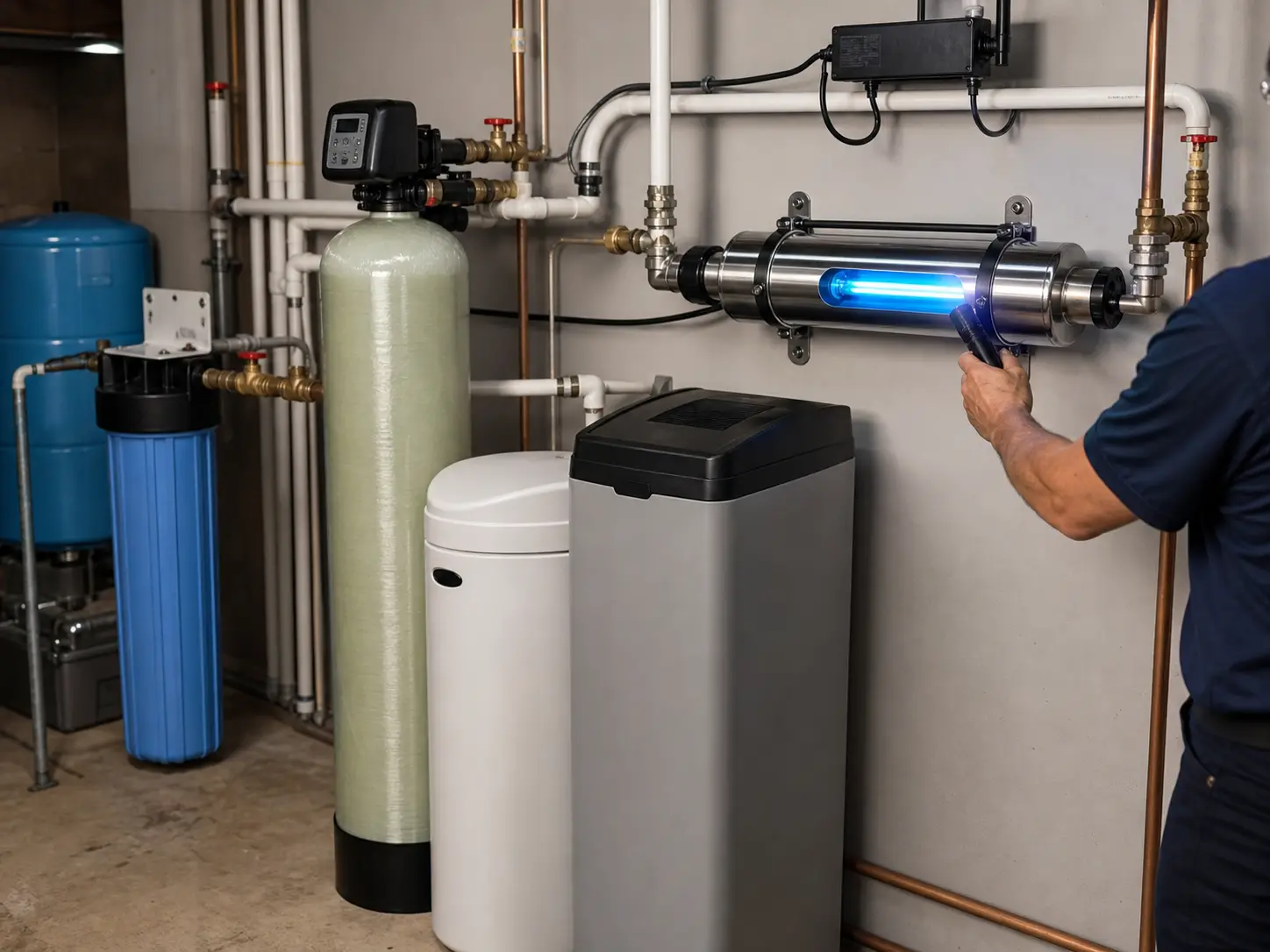
How it works: Well water is treated in stages, in a specific order. Sediment filtration comes first, then an oxidizing filter to pull out dissolved iron, manganese, and hydrogen sulfide, then a softener for hardness. Where bacteria are a concern, a UV chamber goes last: water flows past a UV-C lamp that scrambles the DNA of bacteria, viruses, and cysts so they cannot reproduce. Nothing is added to the water and nothing changes about how it tastes.
Advantages
Removes the iron and sulfur that stain fixtures and cause the rotten-egg smell
UV handles bacteria and cysts continuously, with no chlorine and no taste change
Keeps iron from fouling softener resin, which is what kills undersized well systems
Built as a staged system, so each problem is handled by the right equipment
Drawbacks
More equipment than a city-water setup, so it needs more utility room space
UV only works on clear water — sediment and iron must be filtered out ahead of it
The UV lamp needs replacing about once a year even though it still glows
UV inactivates organisms but removes no chemicals, metals, or hardness
Lifespan: 10-15 years for filtration equipment and UV housings, with annual lamp replacement and periodic media changes.
Cincinnati/Dayton consideration: Private wells are common throughout Warren, Butler, Greene, and Montgomery counties, and unlike municipal supplies nobody tests them for you after installation. The Ohio Department of Health recommends testing private water systems annually for bacteria and nitrate. We start every well project with a full test rather than assuming what is in there.
Sizing Guide
What Size Water Softener Does Your Home Need?
An undersized softener regenerates constantly and burns through salt. An oversized one sits idle long enough for the resin bed to channel. The right size regenerates about once a week — and that starts with knowing your hardness.
The math we actually use
people × ~75 gal per day × hardness in gpg = grains removed daily
A family of four at 10 gpg lands around 3,000 grains a day, or roughly 21,000 between weekly regenerations — which is why 32,000-grain units are so common here. Dissolved iron adds about 4 grains of compensated hardness per 1 ppm, because iron loads the resin the same way hardness does.
Softener capacity by household
A starting point we confirm against your measured hardness before quoting.
1–2 people
~24,000 grains
3–4 people
~32,000 grains
5–6 people
~48,000 grains
Very hard or well water
64,000+ grains
How hard is your water?
Measured in grains per gallon (gpg); one grain equals 17.1 mg/L of dissolved minerals.
Under 1 gpg
Soft
1–3.5 gpg
Slightly hard
3.5–7 gpg
Moderately hard
7–10.5 gpg
Hard typical here
Over 10.5 gpg
Very hard typical here
We size every system to your measured water, not a chart. During the free in-home test we check hardness, iron, pH, and total dissolved solids, look at your plumbing layout and available drain, and recommend the right system — not the biggest one on the truck.
Side by Side
Which System Fixes Which Problem
Most water complaints trace back to one of three causes: hardness, disinfectant taste, or something specific in the water itself. This is the fastest way to see which equipment addresses yours.
Water Softener
Whole-House Filter
Reverse Osmosis
Removes hardness & scale
Yes
No
At one tap only
Fixes chlorine taste & smell
No
Yes
Yes
Where it treats
Whole home
Whole home
Kitchen tap & fridge
Upfront investment
Moderate
Moderate
Lowest
Ongoing upkeep
Salt every 1-2 months
Media every ~5 years
Filters yearly
Typical lifespan
10-15 years
10-15 years
10-15 years
Choose it when…
Spots, scale, no lather
Taste & smell at every tap
Best possible drinking water
Private wells usually need iron, sulfur, or UV stages in addition to the above — we build that around your test results. Contact us for a free water test and an estimate tailored to your home.
Drinking Water
Reverse Osmosis Drinking Water Systems
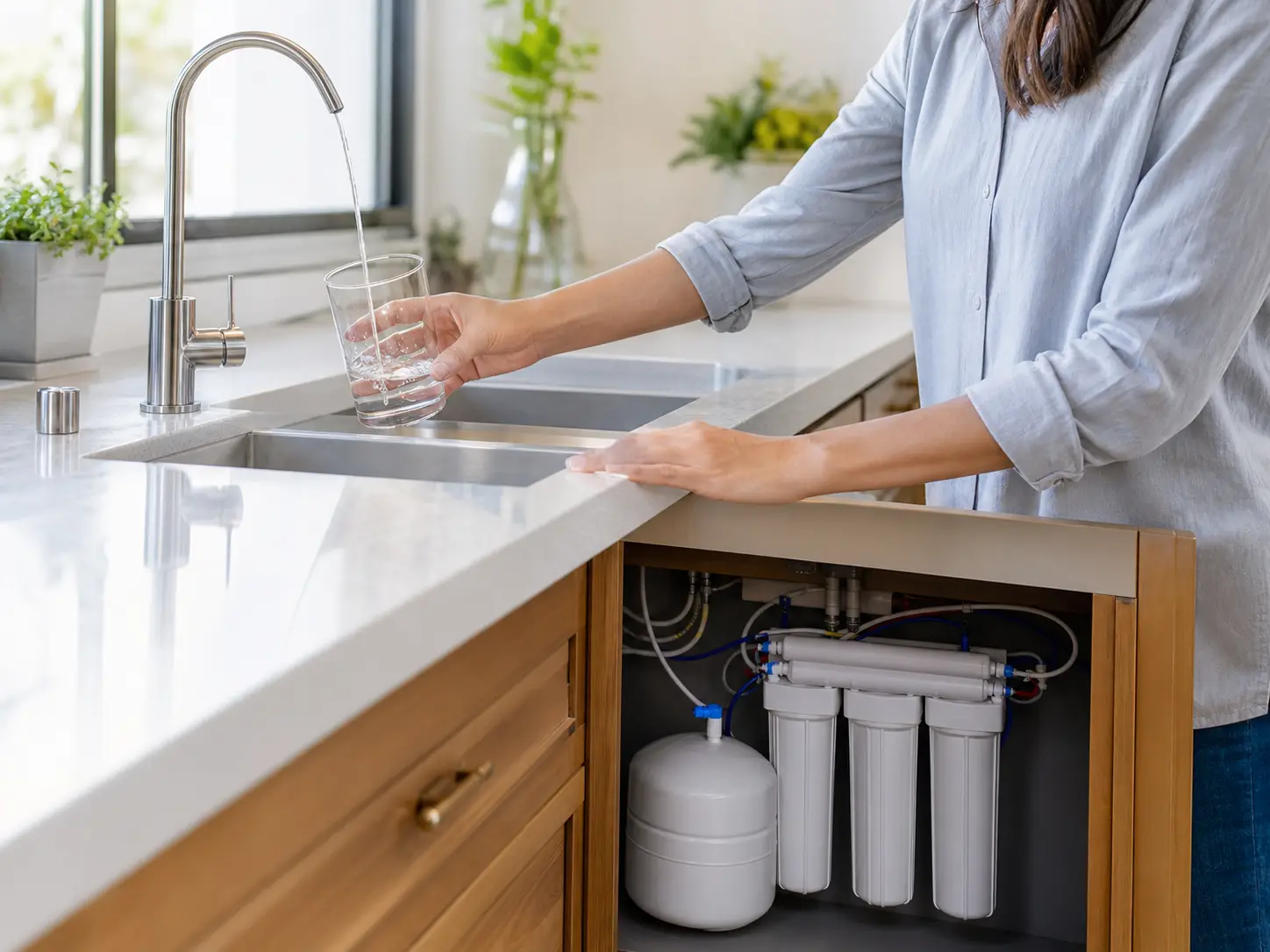
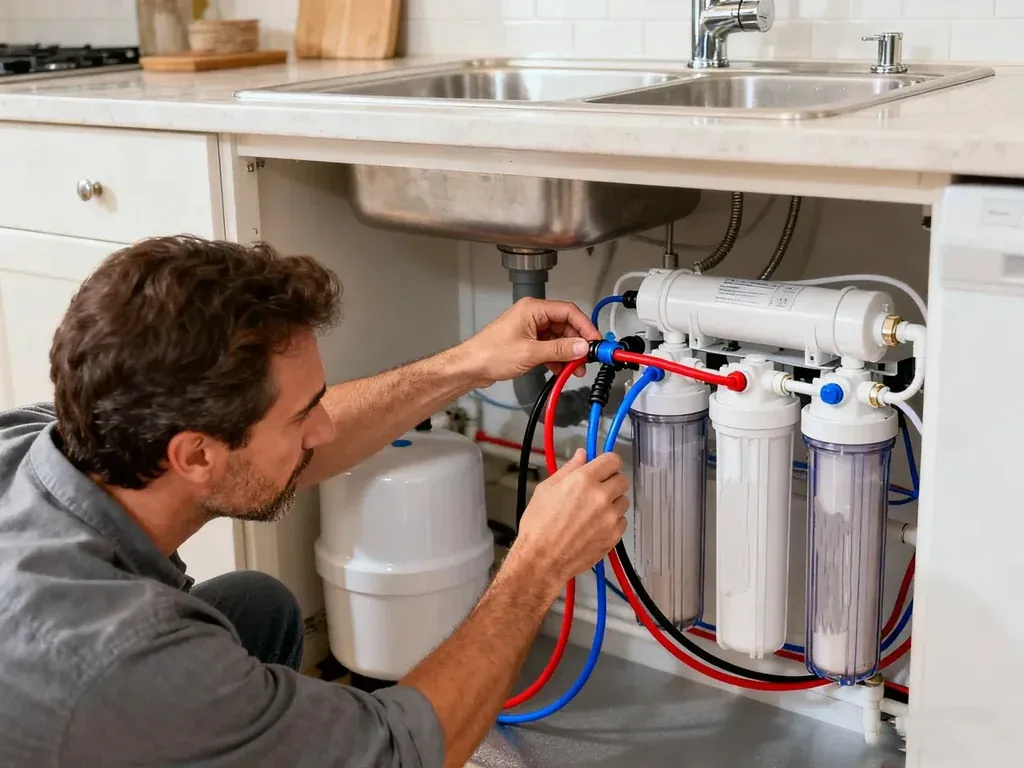
A softener changes what your water does to the house. Reverse osmosis changes what is actually in the glass. The system mounts in the cabinet under your kitchen sink, pushes water through a membrane fine enough to hold back dissolved contaminants, and feeds a dedicated faucet — so the water your family drinks and cooks with is treated to a level no whole-house filter reaches.
Its Own Faucet, Plus the Fridge — We set a separate faucet at the sink and can run a line to the refrigerator, so the ice maker and door dispenser get the same treated water.
Certified, Not Just Advertised — We install systems tested to NSF/ANSI 58, the standard written specifically for residential reverse osmosis, and match the model to what your water test actually found.
No More Hauling Cases — A typical residential unit produces 50 to 100 gallons a day, far more than any household drinks, on demand at the sink. The delivery and the recycling pile both stop.
Serviced on Schedule — Pre-filter, post-filter, and membrane changes are tracked on our Comfort Club plan, so nobody is left guessing how old the filters are.
Reverse osmosis is a series of stages, and each one exists partly to protect the stage after it. This is the order water travels through a standard residential system, and what each stage is responsible for.
1
Sediment Pre-Filter
Catches grit, silt, and rust flakes before they reach anything finer. On well water and after a main break in town, this stage does real work.
Every 6–12 months
2
Carbon Pre-Filter
Pulls out the chlorine and chloramine municipal utilities use to disinfect. This stage is not optional — chlorine degrades a thin-film membrane.
Every 6–12 months
3
RO Membrane
Household pressure pushes water against a semipermeable membrane that passes water molecules and holds back dissolved solids. What does not pass through rinses to the drain.
Every 2–5 years
4
Storage Tank
The membrane works slowly by design, so treated water collects in a small pressurized tank in the cabinet. The tank is why the faucet runs the moment you open it.
Pressure checked yearly
5
Carbon Post-Filter
A final polish on the way out of storage so nothing tastes stale from sitting in the tank. Last stop before the dedicated faucet and the refrigerator line.
Every 12 months
What Reverse Osmosis Reduces
What a given system is certified to reduce depends on the model and the stages in it — we match equipment to your test results rather than to the claims on the box.
Total dissolved solids — the overall dissolved mineral load, which is what leaves water tasting flat, metallic, or heavy
Lead and copper — usually picked up from solder and older household plumbing rather than from the utility's water
Nitrate and nitrite — a standing concern for private wells near cropland, which is why Ohio recommends testing wells for nitrate annually
Sodium added by a softener — which is why RO at the kitchen sink is our answer for households on a strict low-sodium diet
Chlorine, chloramine, and disinfection byproducts — the taste and smell most people notice first on city water
PFAS — reverse osmosis is among the technologies the EPA identifies as effective, and systems certified to NSF/ANSI 58 can carry a tested claim for PFOA and PFOS reduction
Arsenic, fluoride, and other dissolved contaminants — depending on the membrane and the stages ahead of it
Filter & Membrane Service Schedule
Skipped filter changes are the one thing that genuinely shortens an RO system's life. This is the schedule we keep track of for you.
Sediment pre-filter
6–12 months
Carbon pre-filter
6–12 months
Carbon post-filter
12 months
RO membrane
2–5 years
Tank pressure & TDS check
Yearly
System sanitized
At filter change
A TDS reading before and after the membrane is the fastest way to confirm a system is still doing its job — we take both at every visit.
Order of operations
Softener first, reverse osmosis second
Hardness scales an RO membrane and shortens its life, so on Southwest Ohio water we set the softener ahead of the RO unit and let it feed pre-treated water to the membrane. It does not work the other way around: an RO system treats one tap, so it will never take scale out of your water heater or spots off your dishes. Different jobs, different equipment — and plenty of homes here end up with both.
Not sure whether you need reverse osmosis, a softener, or both? The free in-home water test measures hardness, iron, pH, and total dissolved solids, and that TDS number is usually what settles the drinking water question. Book your free water test or call (937) 794‑5060.
Signs Your Water Needs Treatment
Hard and untreated water rarely announces itself. It shows up as small annoyances first, then as appliances that fail years early. Here's what to watch for.
Spots on Glassware and Crust on Fixtures: White, chalky residue that comes back no matter how you rinse is dissolved mineral left behind as water evaporates. The same deposit is forming inside your pipes, water heater, and dishwasher where you cannot see it.
Soap That Won't Lather, Laundry That Feels Stiff: Hardness minerals bind with soap instead of letting it foam, which is why you keep adding more detergent and still get a film on skin, hair, and fabric. Softened water reverses this almost immediately.
Orange Staining or a Rotten-Egg Smell: Rust-colored streaks in sinks, tubs, and toilets point to dissolved iron; a sulfur smell usually means hydrogen sulfide. Both are common in Southwest Ohio well water, and neither is solved by a softener alone — they need filtration ahead of it.
Appliances Failing Early, Pressure Dropping Off: Scale is an insulator. It builds on heating elements and inside supply lines, forcing equipment to work harder and shortening the life of water heaters, dishwashers, washing machines, and coffee makers. Falling flow at a showerhead is often the first hint.
Treating water at the point it enters the house means every tap, shower, and appliance gets the benefit — and the plumbing you never see stops collecting scale. Ask about our financing options to spread the investment out.
1Free Water TestWe measure hardness, iron, pH, and dissolved solids in your home at no cost.
2Custom QuoteUpfront pricing on a system sized to your results — with $0 down financing options.
3Pro InstallLicensed techs plumb it in with a bypass valve and a code-compliant drain.
Appliances That Last Longer — Scale is what wears out water heaters, dishwashers, and washing machines early. Take the hardness out and you stop feeding the problem.
Cleaner Dishes and Laundry — No chalky film on glassware, no dingy whites, and noticeably less detergent needed to get the same result.
Softer Skin and Hair — Without hardness minerals binding to soap, showers rinse clean instead of leaving the film that dries skin out.
Water You Actually Want to Drink — Filtration and reverse osmosis take care of chlorine taste and odor, so the tap replaces the bottled water delivery.
20+Years Experience
24/7Emergency Service
100%Satisfaction Guaranteed
A+BBB Rating
04
The More Heat More Cool Difference
Why Homeowners Trust Us with Their Water
"No guesswork, no overselling."
We Test Before We Recommend — Every project starts with a free in-home test of hardness, iron, pH, and total dissolved solids. You see the numbers, and the recommendation comes from those numbers rather than a script.
Softeners, Filters, RO & UV — We install and service the full range, so we have no reason to push a softener at a problem a filter would fix. Different problems, different equipment.
Sized on Your Actual Water — We work out your daily grain load from household size and measured hardness, and add compensated hardness for iron. That is what determines capacity — not a guess at square footage.
Installed Right, Then Maintained — Bypass valve so the house still has water during service, a drain line run to code, and salt, filter, and lamp changes tracked on our Comfort Club plan so nothing gets forgotten.
We proudly serve homeowners across Greater Cincinnati and Dayton with water softeners, whole-house filtration, reverse osmosis, and well water treatment.
"Gary was honest with me and worked super hard to make sure I stayed within my budget. When I called he picked up almost every time and always responded the same day. In a time where customer service is questionable, this company went above and beyond."
T SurzGoogle Review
"Austin and Andre did great work installing a new furnace for us. They answered all questions and were knowledgeable. Gary was very responsive with our request for service and provided all necessary quotes promptly."
William H Clevenger IIGoogle Review
"I’m very impressed by the group They did a great job on the installation of my mini split. I couldn’t be happier.. I know I can be a tough customer, but certainly they are worth the effort. They have gained my trust!"
Atul Chandoke · Google Review — Mini Split Installation
"I found Andre to be both personable and professional. He took the time to review the condition of my furnace and allowed me to discuss the situation with Gary. Job well done, boys."
Ron Bartley · Google Review — Furnace Service
Have Questions?
Frequently Asked Questions
The everyday signs are white chalky spots on glassware, crusty buildup on faucets and showerheads, soap and detergent that won’t lather, stiff laundry, dry skin and dull hair, orange or brown staining in sinks and tubs, or a chlorine or rotten-egg smell at the tap. The only way to know for certain is to test. We run a free in-home water test that measures hardness, iron, pH, and total dissolved solids, then recommend a system based on those numbers.
Yes. Municipal water across Greater Cincinnati and Dayton is generally considered hard, and private wells in Warren, Butler, Greene, and Montgomery counties are often much harder, frequently with iron and sulfur as well. Hardness is measured in grains per gallon (gpg); anything above 7 gpg is classified as hard and above 10.5 gpg as very hard. Your exact numbers depend on your utility, your well, and the time of year, which is why we test on site rather than guess.
They solve different problems. A water softener removes the dissolved calcium and magnesium that cause scale, spots, and soap scum, using ion exchange and salt. A whole-house filter uses carbon or specialty media to reduce chlorine taste and odor, sediment, iron, or sulfur, but it does not remove hardness. Many Southwest Ohio homes benefit from both: a filter to handle taste, smell, and iron, and a softener to handle hardness.
Often, yes. Municipal utilities treat water to be safe to drink, but they are not required to remove hardness, and most Southwest Ohio systems deliver water that is still hard enough to scale a water heater, spot your dishes, and shorten the life of appliances. City water and well water simply need different equipment, which is why the water test comes first.
No. The salt in the brine tank regenerates the resin bed; it does not flow into your drinking water. Ion exchange does add a small amount of sodium, roughly 8 mg per liter for each grain of hardness removed. If anyone in the home is on a strict low-sodium diet, we can install a reverse osmosis drinking water system at the kitchen sink or set the softener up to run on potassium chloride instead.
Reverse osmosis is among the treatment technologies the EPA identifies as effective for reducing PFAS in drinking water, and at a residential sink it is the most practical of them. What matters is the certification behind the specific unit: look for a system certified to NSF/ANSI 58 with a tested claim for PFOA and PFOS reduction rather than a general “removes contaminants” label. The pre-filters and membrane also have to be changed on schedule for that performance to hold, which is part of what we track on our Comfort Club plan.
Some water does go to the drain, and that is normal operation rather than a fault — it is how the membrane rinses away the contaminants it just captured. Older units sent several gallons down the drain for every gallon they produced; current permeate-pump and high-efficiency designs cut that ratio considerably. For a typical household the drain water works out to roughly a few extra toilet flushes a day, which is the trade-off for the most thorough drinking water treatment available at a residential sink. We run the drain line to code as part of every install.
It depends on what your water test shows, the size of the system, and how your plumbing is laid out. An under-sink reverse osmosis unit is the smallest investment, a whole-home softener or filter is a mid-range project, and a full well treatment train with iron, sulfur, and UV stages costs more. We quote upfront before any work begins, and financing with $0 down is available. Contact us for a free water test and estimate.
Less than most people expect. A softener needs salt added periodically, typically every one to two months depending on household size and hardness. Sediment and carbon cartridges are usually changed annually, reverse osmosis membranes every two to five years, carbon media beds roughly every five years, and UV lamps once a year. We cover these checks on our Comfort Club maintenance plan so nothing gets forgotten.
Yes. Most of the softeners we service were put in by someone else, and parts for the common brands are standard enough that a control valve, injector, or meter is rarely a problem to source. Bring us the brand and rough age and we can usually tell you over the phone whether it is worth repairing.
Age is the deciding factor. Under about ten years, a salt bridge, a stuck valve, or a failed meter is worth fixing and the unit has plenty of life left. Past twelve to fifteen years, a major valve or resin failure on a tank that is already corroding usually costs enough that a new, correctly sized softener is the better spend. We quote both so the comparison is in front of you.
We serve the Greater Cincinnati and Dayton areas including Franklin, Monroe, Mason, West Chester, Middletown, Hamilton, Fairfield, Lebanon, Springboro, Centerville, and surrounding communities.
Limited-Time Offer
FREE In-Home Water Test
We measure hardness, iron, pH, and dissolved solids at your kitchen sink and walk you through the results. No charge, no obligation.
$0 Down Financing Available
Get the water treatment system you need today and pay over time with affordable monthly payments. Ask about approved credit options.